

So far in the 2020s, over 100 languages have gone extinct, or reached the point of no return. UNESCO warns that at least 40% of the world’s languages are endangered, and that on average, one disappears every two weeks. Almost 3,000 of the over 7,000 languages catalogued on Glottolog are considered endangered.
Additionally, languages don’t just carry information, but a culture – humour, lullabies, names, prayers – with each language lost, we lose more than just a system of communication – we lose a shared history, folklore, knowledge and more.
And yet, these languages are not truly dead. Revival movements exist that continue to teach “extinct” languages as second languages, encouraging children to learn and speak these languages in school and at home, with the aim of one day restoring native speakers of the language once more. And often, these movements do not start spontaneously within a community – they start from the determination and passion of a small few people. And this spark of passion can be kindled by a community of connection and revitalisation, restoring cultures and ways of life to those who had once lost them.
What does this look like? Consider the story of Marie Wilcox – a Native American woman from California who spoke the language of Wukchumni, a Yokutsan Indigenous language spoken by the Tule-Kaweah Yokuts of California. After the death of her grandmother, the only other person in her family who spoke Wukchumni, she began to work to make sure that it could still be spoken after she too was gone. She spent years writing words down as she remembered them, then typing them into a computer, building a dictionary entry by entry, as well as adding audio recordings for each word, along with the help of Nicholas Luna, an Apache. And to top it off, she began doing this work when she was 60 years old!
A dictionary itself doesn’t bring a language back to life. However, it can do something just as important: it can allow others to learn it – opening the door to learning for family members and community members, now or in the future. Coverage following her passing mentions that several fluent speakers of the language returned, including her own daughter. The result of her passion was the fact that Wukchumni could continue to be spoken.
Another example of language preservation has been seen in Hawaiʻi. In the early 1980s, a group of Hawaiian-language educators – educator Kauanoe Kamanā and her husband William H. “Pila” Wilson as well as others like Larry Kimura – met with a plan to preserve the Hawaiian language. They came with an understanding that languages survive when children grow up hearing them in ordinary life – in jokes, play, and community. From that idea came ʻAha Pūnana Leo, created in 1983 as a grassroots effort to revive ʻōlelo Hawaiʻi.
They built “language nests” – preschool environments where the language is used in naturalistic settings, being used freely in all situations. And they didn’t invent the idea from nothing; they drew inspiration from Māori language revival efforts in New Zealand.
In modern times too, language preservation is on a larger scale than ever. Online databases make storing language dictionaries and audio recordings easier than ever. One of the largest projects of language preservation is Wikitongues, founded in 2014 as an all-volunteer effort to raise awareness about the scope, scale, and value of linguistic diversity. Since then, they have supported grassroots language documentation for over 700 languages, or 10% of all the languages in the world, and continue to be an open-source repository that anyone can contribute to. In 2019, they published the Language Sustainability Toolkit, an introduction to the process of saving minority languages, making it more accessible than ever before.
Overall, language revival is often sparked by a small number of passionate people, and sustained by communities that turn passion into habit and habit into a future. The passion of a group of people who care deeply about maintaining and spreading languages, sustained by the continued dedication and drive of a community, turns into the fruits of a culture maintained and preserved, for all of us now and for the people of the future. So if you speak a language other than English, go on and use it in your community – you may just keep it going for communities of the future.
Sources:
https://en.wikipedia.org/wiki/Marie_Wilcox
https://www.ahapunanaleo.org/english-home-landing
https://wikitongues.org/about/faq/
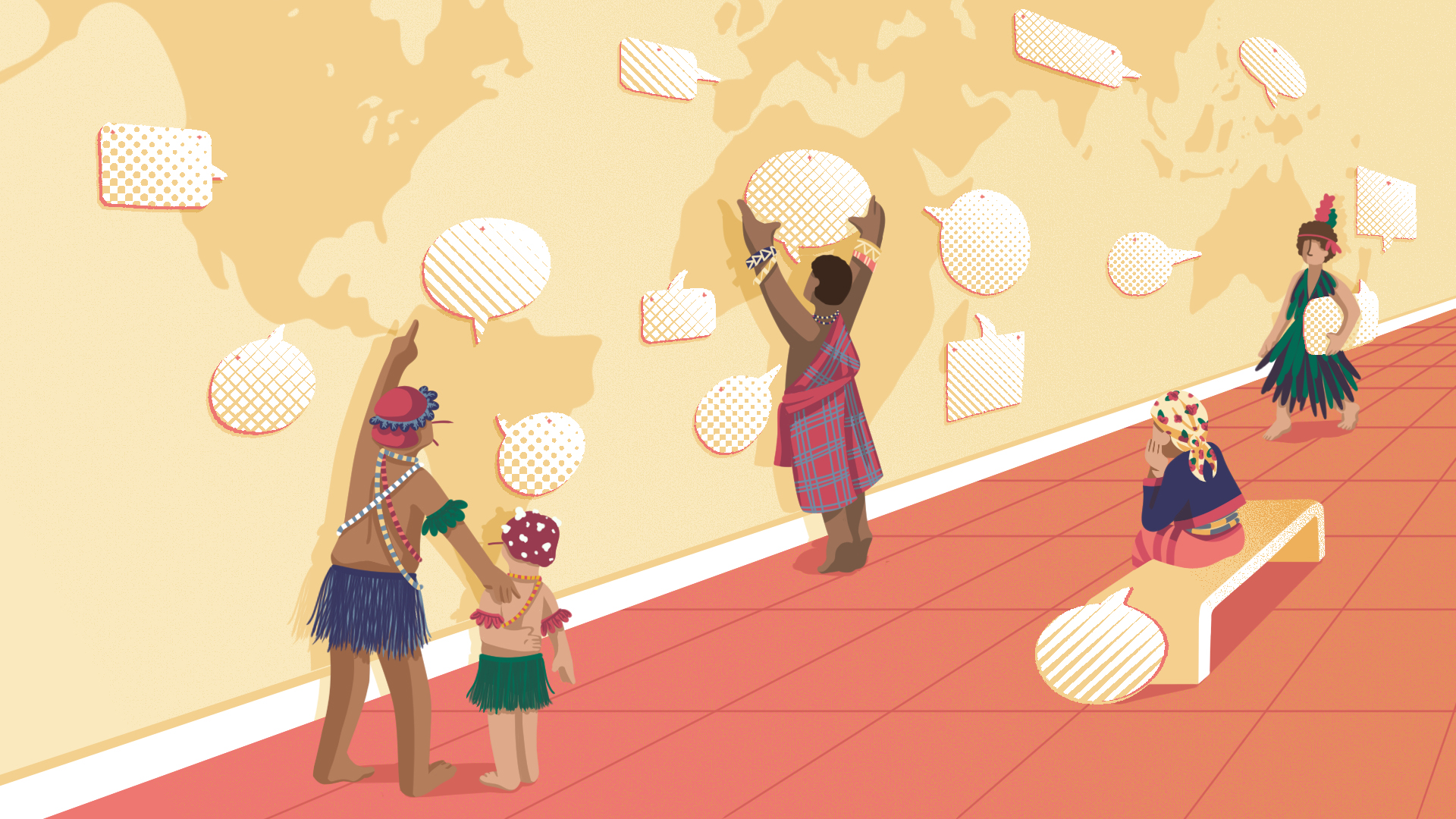
Image from https://www.sapiens.org/app/uploads/2019/11/Languages_header_2-1.jpg
Leave a Reply